

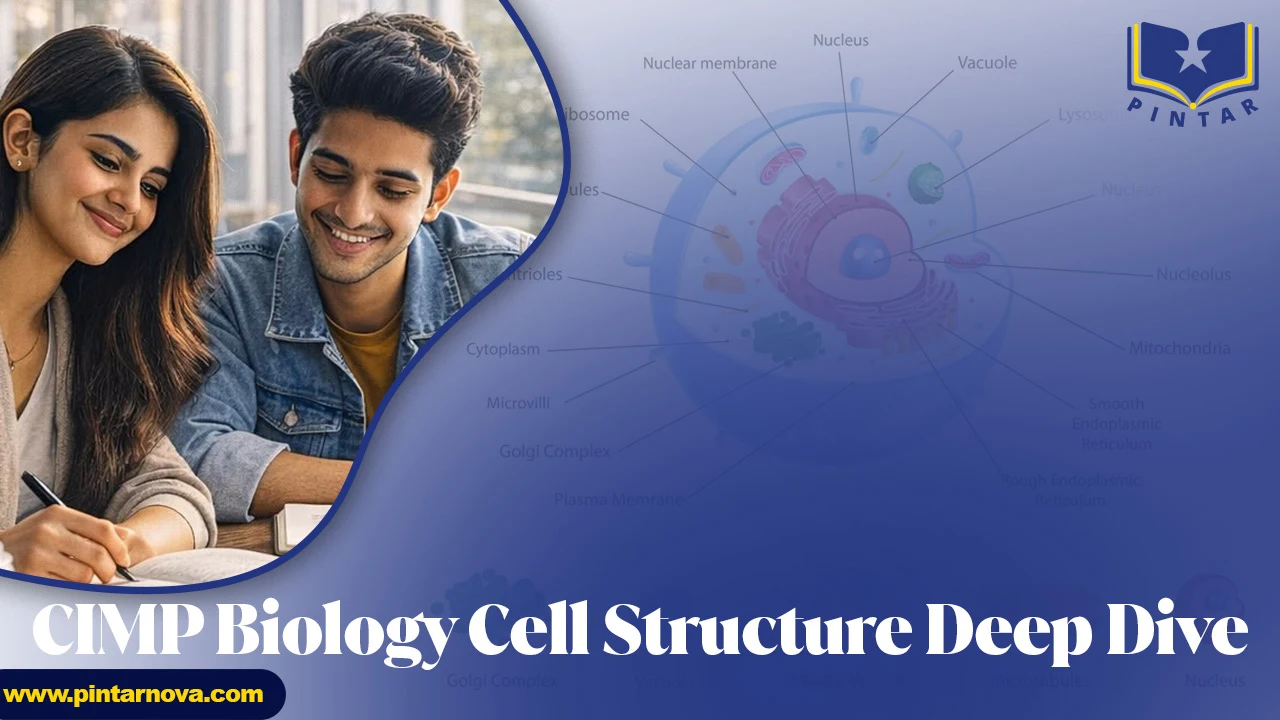
Biology is a key subject in the Canadian International Matriculation Programme (CIMP). One of the most important topics students learn is cell structure, which explains how living organisms function at the microscopic level. Cells are the basic units of life, and understanding their structure helps students learn advanced concepts such as genetics, metabolism, and cell division. However, many Malaysian students find topics like organelles, membrane transport, and DNA replication difficult to understand. Without proper guidance, these concepts can become confusing. This is why many students choose CIMP biology tuition Malaysia to receive expert support. With structured lessons and clear explanations, students can master cell biology more effectively.
Understanding Cell Structure with CIMP Biology Tuition Malaysia
Cells perform the basic functions required for life. Every organism, whether it is a bacterium or a human being, is made of cells. Learning about cell structure allows students to understand how life works at the microscopic level. In the cells CIMP MY curriculum, students explore the different parts of the cell and how each component supports life processes.
The Importance of Cell Structure in Biology
Cell structure forms the foundation of many biology topics. Students who understand cells clearly will find it easier to study genetics, physiology, and molecular biology later.
For example, understanding how the nucleus stores DNA helps students grasp how genetic information is passed from one generation to another. Similarly, learning about mitochondria helps explain how cells produce energy.
Key Organelles Students Must Understand
A cell contains several specialized structures called organelles. Each organelle performs a specific function. Some important organelles include:
- Nucleus – controls cell activities and stores genetic information
- Mitochondria – produces energy for the cell
- Ribosomes – responsible for protein synthesis
- Endoplasmic Reticulum – helps transport materials within the cell
- Golgi apparatus – modifies and packages proteins
Students often struggle to remember the functions of each organelle. This is why many students benefit from organelles tuition, where tutors explain these structures using diagrams and simplified explanations.
If you want expert guidance on CIMP biology topics like cell structure, Pintarnova CIMP biology tuition Malaysia online provides personalized lessons with experienced tutors who simplify complex biology concepts for Malaysian students.
Organelle Functions in CIMP Biology Tuition Malaysia
A cell contains several specialized structures called organelles. Each organelle performs a specific function that keeps the cell alive. Students often struggle to remember these functions. Many therefore, seek organelle tuition to understand how each structure contributes to cellular activity. Below is a simplified table to help students remember the major organelles and their functions.
| Organelle | Function | Importance in CIMP Biology |
| Nucleus | Stores DNA and controls cell activities | Acts as the control center of the cell |
| Mitochondria | Produces energy (ATP) | Provides energy for cellular processes |
| Ribosomes | Protein synthesis | Essential for growth and repair |
| Endoplasmic Reticulum | Transports proteins and lipids | Helps in internal cell transport |
| Golgi Apparatus | Modifies and packages proteins | Prepares molecules for transport |
| Lysosomes | Breaks down waste and damaged organelles | Maintains cell health |
| Cell Membrane | Controls entry and exit of substances | Maintains internal balance |
| Cytoplasm | Holds organelles and chemical reactions occur here | Supports metabolic activities |
Understanding these organelle functions is essential for answering exam questions in the cells CIMP MY syllabus.
Prokaryotic vs Eukaryotic Cells Explained in CIMP Biology Tuition Malaysia
Understanding the difference between prokaryotic and eukaryotic cells is another essential topic in the CIMP syllabus.
What Are Prokaryotic Cells?
Prokaryotic cells are simple and small. They do not have a nucleus or membrane-bound organelles. Bacteria are the most common examples of organisms with prokaryotic cells.
Despite their simplicity, prokaryotic cells can perform all basic life functions. They reproduce quickly and adapt easily to different environments.
What Are Eukaryotic Cells?
Eukaryotic cells are larger and more complex. They contain a nucleus and several specialized organelles.
Examples of organisms with eukaryotic cells include:
- Plants
- Animals
- Fungi
- Protists
These cells can perform complex biological processes because their organelles allow different tasks to occur in different parts of the cell.
Why Students Often Find This Topic Challenging
Many students struggle with this topic because they must compare structures, functions, and examples of each cell type. Memorizing the differences alone is not enough. Students must also understand how these differences affect biological processes.
Through CIMP biology tuition Malaysia, tutors often use comparison charts and diagrams to make these concepts easier to remember. Students learn how to analyze questions and explain the differences clearly in exams.
Cell Theory, Microscopy, and Lab Techniques Every CIMP Student Must Know
Modern biology is built on several scientific principles. One of the most important is cell theory, which explains the basic characteristics of living organisms.
The Three Principles of Cell Theory
Cell theory includes three main ideas:
- All living organisms are made of cells.
- Cells are the basic units of life.
- All cells arise from existing cells.
These principles help scientists understand how organisms grow, develop, and reproduce.
How Microscopy Helps Scientists Study Cells
Cells are too small to be seen with the naked eye. Scientists use microscopy to observe cell structures. The most common microscope used in school laboratories is the light microscope. It allows students to observe plant and animal cells during experiments.
Advanced microscopes, such as electron microscopes, provide much higher magnification and reveal detailed structures inside cells. Understanding microscopy helps students interpret diagrams and experimental results in biology exams.
Essential Lab Techniques for Biology Students
In addition to theory, CIMP students also learn practical lab techniques.
Some common techniques include:
- Preparing microscope slides
- Staining cells to observe structures
- Recording scientific observations
- Interpreting microscopic images
These practical skills help students develop scientific thinking and improve their understanding of biological structures. Students who practice these techniques regularly often perform better in laboratory assessments and written exams.
Common Lab Experiments in CIMP Biology Tuition Malaysia
| Experiment | Purpose | What Students Learn |
| Onion cell observation | Observe plant cells under microscope | Identify cell wall, nucleus, cytoplasm |
| Osmosis experiment | Study membrane transport | Understand water movement |
| Root tip mitosis slide | Observe cell division | Identify mitosis stages |
| DNA extraction | Extract DNA from fruits | Understand genetic material |
These experiments help students understand biological processes more clearly.
Understanding lab experiments becomes easier with expert guidance. Pintarnova CIMP biology tuition Malaysia online helps students review laboratory concepts, understand biological diagrams, and prepare for both theory and practical assessments.
Mitosis, Meiosis, and DNA Replication Made Easier with CIMP Biology Tuition Malaysia
Cell division is one of the most complex topics in the CIMP biology syllabus. It explains how cells reproduce and how genetic information is passed from one cell to another.
Understanding Mitosis
Mitosis is the process by which a cell divides to form two identical daughter cells. This process is essential for growth, tissue repair, and normal body function.
Mitosis occurs in several stages, including:
- Prophase
- Metaphase
- Anaphase
- Telophase
Students must understand the sequence of these stages and how chromosomes behave during each phase.
Understanding Meiosis
Meiosis is different from mitosis. It produces reproductive cells such as sperm and egg cells. During meiosis, a cell divides twice and produces four daughter cells. Each of these cells contains half the number of chromosomes found in the original cell. Because meiosis involves multiple stages and genetic variation, many students find it difficult to remember.
The Role of DNA Replication
Before any cell divides, it must copy its DNA. This process is called DNA replication. DNA replication ensures that each new cell receives an identical copy of genetic information. Without this process, cells would not function properly. Many students search for CIMP mitosis prep Penang or similar support because these topics are often tested in exams. Through CIMP biology tuition Malaysia online, tutors simplify these processes with diagrams, animations, and exam-focused explanations.
How Online CIMP Biology Tuition Malaysia Helps Students Master Cell Structure
Online education has become an effective learning option for many Malaysian students. It allows students to receive expert support without traveling to physical tuition centers.
Personalized Learning for Biology Students
One major advantage of online tuition is personalized learning. Tutors can focus on areas where students struggle, such as cell structure or membrane transport.
For example, students searching for cell structure deep dive KL often need detailed explanations of organelles and cellular processes.
With online lessons, tutors can adjust the pace of learning and provide extra practice when needed.
Support for Students Across Malaysia
Students from different regions can benefit from online tuition. For instance:
- Students in Penang may look for CIMP mitosis prep Penang.
- Students in Selangor may search for affordable meiosis tuition Selangor.
- Students in Johor may want help with CIMP cell theory Johor.
Online platforms allow students from all these areas to connect with qualified tutors and access the same high-quality lessons.
Exam Preparation and Academic Confidence
Structured tuition also helps students prepare for exams. Tutors provide practice questions, explain common mistakes, and teach effective revision strategies.
As students gain confidence in difficult topics, their academic performance improves. Instead of memorizing information, they begin to understand the logic behind biological processes.
Final Thoughts
Understanding cell structure is essential for success in the CIMP biology curriculum. Topics such as organelles, cell theory, microscopy, mitosis, and DNA replication build the foundation for advanced biology learning. However, these concepts can feel complex when students study alone. With the right guidance, students can develop a clearer understanding and improve their confidence in biology exams.
This is why many Malaysian students turn to CIMP biology tuition Malaysia for additional support. Programs like PintarNova’s CIMP biology tuition Malaysia online provide personalized lessons, expert tutors, and structured revision strategies. With consistent guidance and practice, students can strengthen their knowledge and achieve better academic results in CIMP biology.
FAQs About CIMP Biology Tuition Malaysia
What is cell structure in CIMP biology?
Cell structure in CIMP biology explains the different parts of a cell and their functions. Students learn about organelles, membranes, and how cells support life processes.
What is the difference between prokaryotic and eukaryotic cells?
Prokaryotic cells are simple and lack a nucleus, while eukaryotic cells contain a nucleus and organelles. Plants, animals, and fungi are examples of eukaryotic organisms.
What is the difference between mitosis and meiosis?
Mitosis produces two identical daughter cells used for growth and repair. Meiosis produces reproductive cells with half the chromosome number and creates genetic variation.
How do microscopes help students study cells?
Microscopes allow students to observe cell structures that are too small for the naked eye. They help identify organelles and understand cellular organization.
Why do Malaysian students choose CIMP biology tuition Malaysia?
Many students choose CIMP biology tuition Malaysia to understand complex biology topics with expert tutors, structured lessons, and exam-focused guidance for better academic performance.
